
Twelve days into the Iran conflict, global financial markets have fractured along a single fault line: energy. Since US-Israeli strikes began on February 28, oil-exporting nations have posted equity gains while import-dependent economies across Asia and Europe absorb compounding losses that analysts describe as structurally self-reinforcing. Brent crude climbed above $92 per barrel on March 6 — a 28% advance from its pre-conflict close — and has remained elevated in the $91–$93 range through the March 12 morning session, high enough to sustain persistent pressure on every country that buys, rather than sells, crude on world markets.
The Hormuz Choke Point
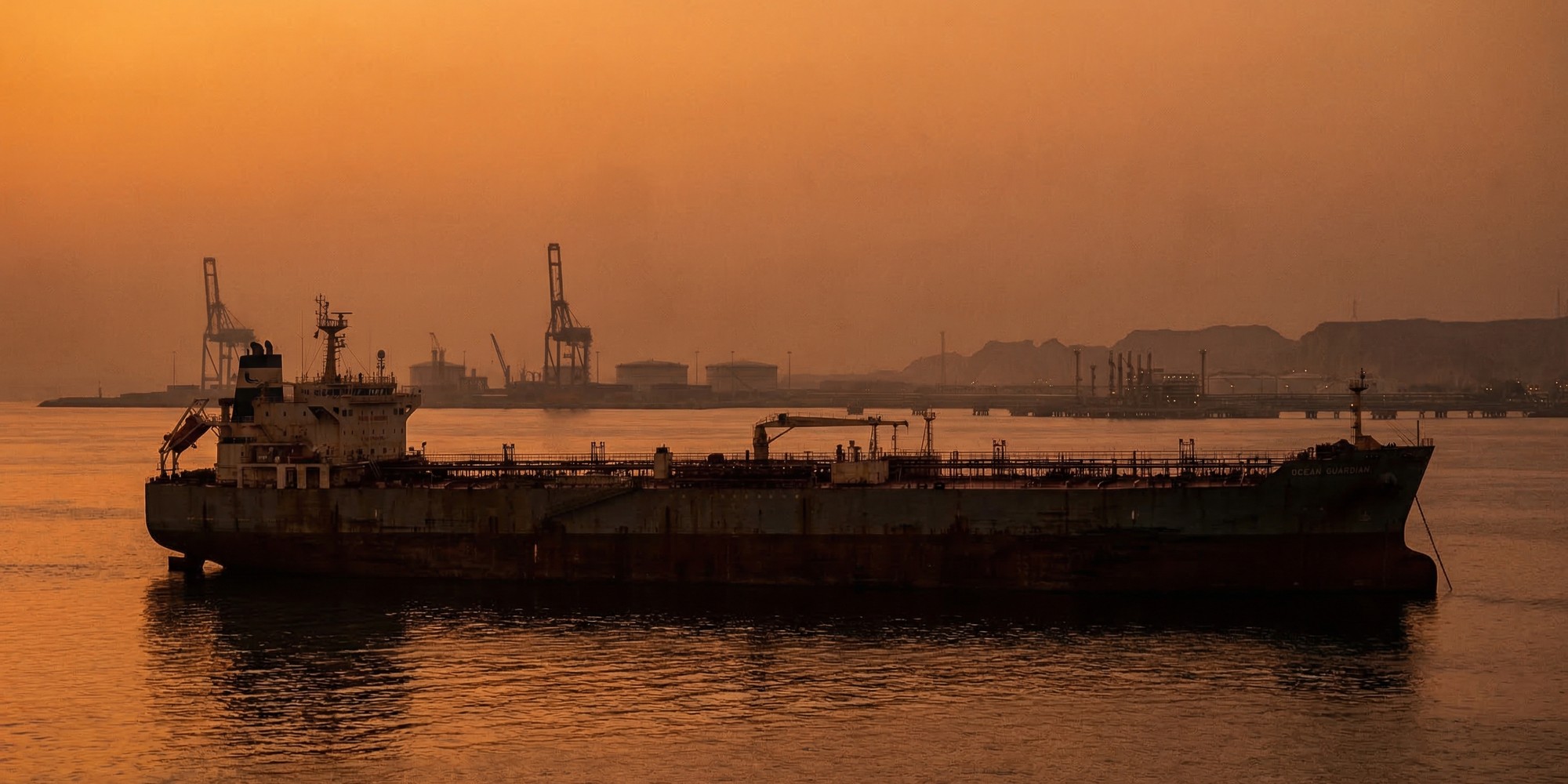
The Strait of Hormuz — through which approximately 20% of the world's daily oil supply normally moves — remains effectively closed to commercial traffic following Iranian threats and incidents targeting vessels transiting the Persian Gulf. According to CSIS energy security analysts, global oil supplies are running roughly 20 million barrels per day short of normal flow, a structural disruption without modern precedent. Qatar, whose Ras Laffan LNG complex suffered drone strikes in the opening days of the conflict, has also suspended significant liquefied natural gas export volumes, amplifying natural gas price pressures in Europe and East Asia where spot gas prices have surged in tandem with crude. The compound effect on energy-importing economies is a double squeeze: higher oil and higher gas import bills arriving simultaneously.
Asia Bears the Sharpest Burden
The asymmetry of pain is most acute across Asia's net energy-importing economies. South Korea's KOSPI has fallen 12.2% since the conflict's outbreak — the steepest decline among major tracked equity indices — reflecting both the country's energy deficit (equivalent to 5.7% of GDP) and its near-total dependence on Gulf crude, which supplies approximately 73% of its oil needs. A Won 100 trillion ($68 billion) market stabilisation fund activated by President Lee Jae Myung triggered a sharp intraday rebound earlier this month, but the cumulative loss from pre-conflict levels has since reasserted itself as the supply disruption proved more persistent than investors had priced. Thailand's SET index has shed 10.7% over the same period, Vietnam 8.75%, Japan's Nikkei 225 7.2%, and India's Sensex 5.7%.
Japan's losses have been compounded by yen appreciation: safe-haven currency demand has strengthened the yen against the dollar, which dampens the reported earnings of Nikkei-listed exporters and adds a second layer of pressure on top of energy cost headwinds. India, despite a US-brokered waiver allowing continued purchases of discounted Russian crude, still faces elevated import costs on the substantial Gulf-origin volumes it cannot redirect.
European Industrial Economies Take the Hit
European equity markets have recorded broad-based declines calibrated closely to each economy's energy import intensity. Germany's DAX — the eurozone's most industrially sensitive benchmark — has fallen 8.0% since the conflict began, the continent's sharpest loss, as manufacturers confront energy input costs rising faster than they can be passed through to customers. France's CAC 40 and Switzerland's SMI have each shed 7.7%; Italy's FTSE MIB has fallen 6.6% and Poland's WIG20 6.3%.
The oil price shock from the Hormuz shutdown represents a supply-side inflationary impulse that central banks cannot address with rate policy without simultaneously worsening the growth outlook.
— ECB internal analysis excerpt, reported by Reuters, March 2026
The ECB's March 19 projection round will now need to incorporate an estimated 0.4–0.5 percentage-point upward revision to the eurozone inflation outlook — a recalibration that severely constrains the institution's room to ease in response to softening growth data. On Wall Street, where the Dow Jones fell 289 points on Tuesday as a CPI print reinforced oil-driven inflation concerns, equity performance reflects a mixed picture: US energy producers benefit from elevated prices while energy-intensive industries and rate-sensitive sectors face headwinds from a Federal Reserve that cannot afford to cut in a high-oil environment.
Exporters Chart a Different Course
For the world's major hydrocarbon exporters, the arithmetic runs in precisely the opposite direction. Iraq leads the world with an energy trade surplus equivalent to 40.8% of GDP — meaning oil revenues represent nearly half the entire economy — positioning it as the single largest relative beneficiary of sustained elevated prices, though conflict-zone proximity has tempered the full risk-on trade that might otherwise follow. Saudi Arabia's Tadawul All Share Index has gained 2.5% since the outbreak, supported by energy revenue inflows that are partially offset by reduced regional investment activity. Norway's Oslo Børs has added 1.1%, its integrated energy sector — anchored by Equinor — providing the primary driver of outperformance. Russia's energy surplus of 9.1% of GDP also positions it as a structural beneficiary, though Western sanctions continue to constrain the speed and volume at which it can capitalise on spot market prices.
What to Watch
The trajectory of the global market split will hinge on whether diplomatic engagement produces a credible timeline for Hormuz reopening. President Trump has committed to US naval escorts for commercial shipping through the strait and authorised the International Development Finance Corporation to provide marine insurance backstops — measures that CSIS analysts suggest could restore partial Hormuz functionality within two to three weeks if Iran's posture shifts. Washington has also authorised a temporary loosening of energy sanctions on Russian oil imports into India, a move closely monitored by Gulf partners concerned about precedent-setting, as detailed in analysis of US diplomatic positioning across the Gulf region.
Key data releases in the coming week include the IEA's March Oil Market Report (expected March 13), eurozone preliminary PMI readings on March 14, and the ECB's revised staff projections on March 19 — each of which will provide fresh inputs into central bank rate-path calculations. Until the physical supply disruption eases, the divergence between energy exporters and importers in equity performance, currency trajectories, and inflation dynamics will remain the dominant structural fact in global markets.