
Brent crude touched $115.20 per barrel on Monday — surpassing the $100 threshold for the first time since Russia's 2022 invasion of Ukraine — before retreating to $98.96 early Tuesday as markets parsed diplomatic signals suggesting the US-Iran conflict could be nearing a resolution. The benchmark's intraday peak represented an 89% advance from Brent's January 2026 level of approximately $60 per barrel, marking what economists are describing as one of the most compressed energy price shocks in modern market history.
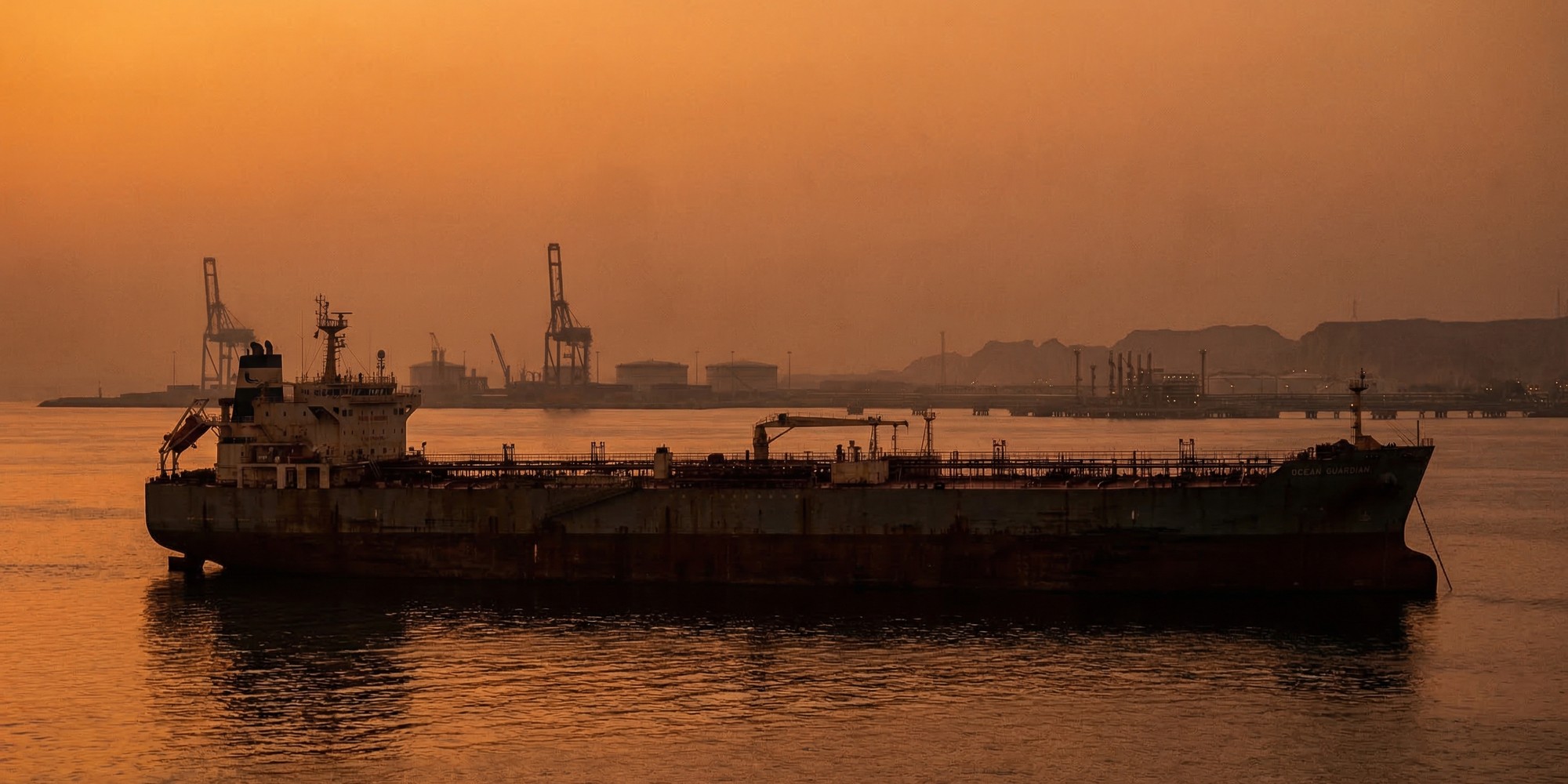
The move was driven by Iran's effective closure of the Strait of Hormuz following the outbreak of the US-Israeli military campaign, which disrupted a waterway responsible for approximately 20% of global seaborne oil and liquefied natural gas supply. With shipping traffic anchored outside the strait rather than risking transit, the market entered the week of March 9 with acute supply-side anxiety. Oil production cuts across the broader Middle East — a secondary effect of the military campaign — compounded the squeeze.
That closure is the same strait-as-war page on Armed Conflicts’ Strait of Hormuz crisis brief.
The AIS picture of hulls waiting outside the narrows is on OilRoutes’ Hormuz tanker-traffic note.
Tuesday's partial retreat — Brent down roughly 14% from Monday's intraday high — followed President Trump's Monday evening remarks suggesting the conflict could conclude "very soon," prompting a brief risk-on rotation across equity and commodity markets. Analysts cautioned, however, that even a near-term ceasefire is unlikely to reverse the supply dislocation immediately. Energy consultancy Wood Mackenzie noted that physical oil flows through the strait could remain disrupted for weeks after any cessation of hostilities, as insurers reassess coverage and tanker operators recalibrate routing protocols.
Stagflation Risk Moves to the Foreground
The oil shock has revived a macroeconomic conversation that many policy circles had considered dormant: the risk of stagflation, the toxic combination of stagnating growth and rising inflation. Economists at Royal Bank of Canada project that US headline CPI will surge to approximately 3.7% if Brent sustains above $100 per barrel — a significant deterioration from February's reading and one that would complicate the Federal Reserve's already-cautious policy posture.
The consumer-level impact is already evident. US pump prices rose 25 cents over the week ending March 7 and a further 25 cents over the weekend, averaging $3.44 per gallon by Sunday evening, according to GasBuddy — a 50-cent weekly advance that represents a historically rapid pass-through from crude futures to retail energy costs. At the commercial level, freight carriers, airlines, and manufacturers with energy-intensive operations are absorbing cost surges that will take weeks to fully work through supply chains, amplifying the medium-term inflationary trajectory.
Beyond petroleum, gas and fertilizer supplies have also been disrupted by the conflict. Natural gas prices have climbed sharply as LNG tankers avoid the Hormuz corridor, with spot cargoes in Europe and Asia repricing to reflect restricted supply availability. Agricultural inputs — particularly nitrogen-based fertilizers synthesized from natural gas — face cost pressure that analysts at Oxford Economics believe will feed into global food price indices over the coming months. The combination places persistent upward pressure on core and headline inflation simultaneously, precisely when major central banks had hoped that inflationary pressures were finally subsiding.
Europe and Asia Navigate Compounding Pressures
The inflationary channel does not run exclusively through US energy markets. Oxford Economics projects that UK and eurozone inflation will also move materially higher if elevated oil prices persist through the second quarter. The European Central Bank, which was widely expected to proceed with a 25-basis-point rate cut at its March 19 meeting, now faces intensified uncertainty. As US markets absorbed the $100 oil threshold last week, the ECB's projections for energy-driven inflation will need to be revised upward — potentially delaying what had been an expected easing cycle.
In Asia, the impact bifurcates along energy-import lines. Japan, which imports virtually all of its crude, saw the Nikkei 225 fall more than 6% on Monday as the $115 Brent print hit screens, with the Bank of Japan's nascent rate-normalization program coming under direct pressure from the energy-driven inflation dynamic. South Korea's KOSPI, already stressed by the broader geopolitical environment, fell 7% in Monday's session before stabilizing Tuesday as US diplomatic signals filtered through.
China, the world's largest crude importer, represents a different kind of exposure. Beijing sources the bulk of its oil through diverse channels — including sanctioned Iranian crude — but the Hormuz disruption strains even those alternative supply chains. China's National People's Congress had set a 2026 GDP growth target of 4.5–5% just days earlier, a target economists already viewed as challenging given domestic demand headwinds. A sustained energy shock from the Middle East adds a further obstacle to that ambition. Iran's military campaign across the Gulf region has deepened the uncertainty facing Beijing's planners who had been counting on regional stability to anchor commodity import chains.
Outlook: What to Watch This Week
With the conflict's trajectory driving all major asset classes, three near-term data points stand out. First, the US Consumer Price Index for February, due Thursday, will provide the baseline against which the oil shock's inflationary impact will be measured. A reading above consensus — already elevated by pre-conflict energy movements — would sharpen the stagflation narrative and increase pressure on the Fed's March 19 meeting to maintain its current hold posture.
Second, any formal diplomatic progress on a ceasefire will be a direct catalyst for crude prices. Brent's roughly $16 intraday recovery from Monday's peak on Trump's initial remarks illustrates how sensitive the market remains to conflict-resolution signals. A verified diplomatic breakthrough — or alternatively, an escalation in military activity — will likely produce a rapid repricing across energy and equity markets. The US-led effort to escort tankers through the Hormuz corridor and secure insurance coverage for transit represents a partial supply-side pressure valve, but its efficacy remains unproven in contested conditions.
Third, the ECB's March 19 meeting will force the first formal policy acknowledgment from a major central bank that the oil shock has altered the inflation trajectory enough to reconsider the pace of monetary easing. How the ECB frames its updated energy-inflation projections will set the tone for a broader reassessment across developed-market central bank communications over the balance of the first quarter.
"There's a good chance that we're seeing one of the most sudden increases in the cost of oil to the global economy ever."
— Warren Hogan, Economic Adviser, Judo Bank, March 9, 2026
For markets, the near-term calculus centers on duration. A short, sharp conflict followed by a rapid Hormuz reopening would deliver a significant deflationary tailwind within weeks, giving central banks room to return to their pre-crisis policy tracks. A prolonged disruption — measured in months rather than weeks — would fundamentally reset growth-inflation trade-offs across the major economies, with emerging market oil importers facing the most acute pressure as dollar-denominated energy costs and currency depreciation compound simultaneously.