Five weeks ago, global financial markets were pricing two Federal Reserve interest rate cuts in 2026. As of Friday, March 20, CME FedWatch data showed approximately a 20% probability of a rate hike at the June meeting — a figure that stood at 0% in late February. The driver is a Middle East conflict that has pushed Brent crude to $112.19 per barrel and shows no sign of ending on schedule. The Iran war has not just reshuffled rate expectations — it has inverted them entirely.
The Rate Cycle Reversal
The arc of the 2026 rate cycle has been compressed into a single month. In December 2025, the FOMC's dot plot showed a consensus for two cuts during the year. By the March 18 meeting, that consensus had eroded to one cut — with seven of 19 officials now projecting zero cuts for 2026, up from six in December. The Fed held at 3.50–3.75% by an 11-1 vote, with Governor Miran dissenting in favor of a 25-basis-point reduction. The core PCE inflation forecast was revised upward to 2.7% for 2026, from 2.5% in December.
The bond market absorbed the shift immediately. The 10-year Treasury yield jumped 11 basis points in a single Friday session, settling at 4.39% — approaching 2023 highs. More significantly, the 30-year bond yield closed the week at 4.96%, within striking distance of the 5% threshold that bond market participants have flagged as a trigger point for broader financial tightening.
Baird market strategist Ross Mayfield described the shift bluntly: "The market has removed basically every rate cut from this year, and now is pricing odds of a hike." The FOMC made its March 18 decision with Brent crude at approximately $108 per barrel. President Trump's subsequent infrastructure ultimatum — directed at Iranian energy and military facilities on March 21–22, as detailed by US Market Updates — moved the calculus further in the direction of sustained energy inflation.
Parallel Pressure: ECB, BOE, and BOJ
The Fed is not navigating this terrain alone. All four major central banks face a version of the same constraint: inflation too high to cut, growth too weak to comfortably hike.
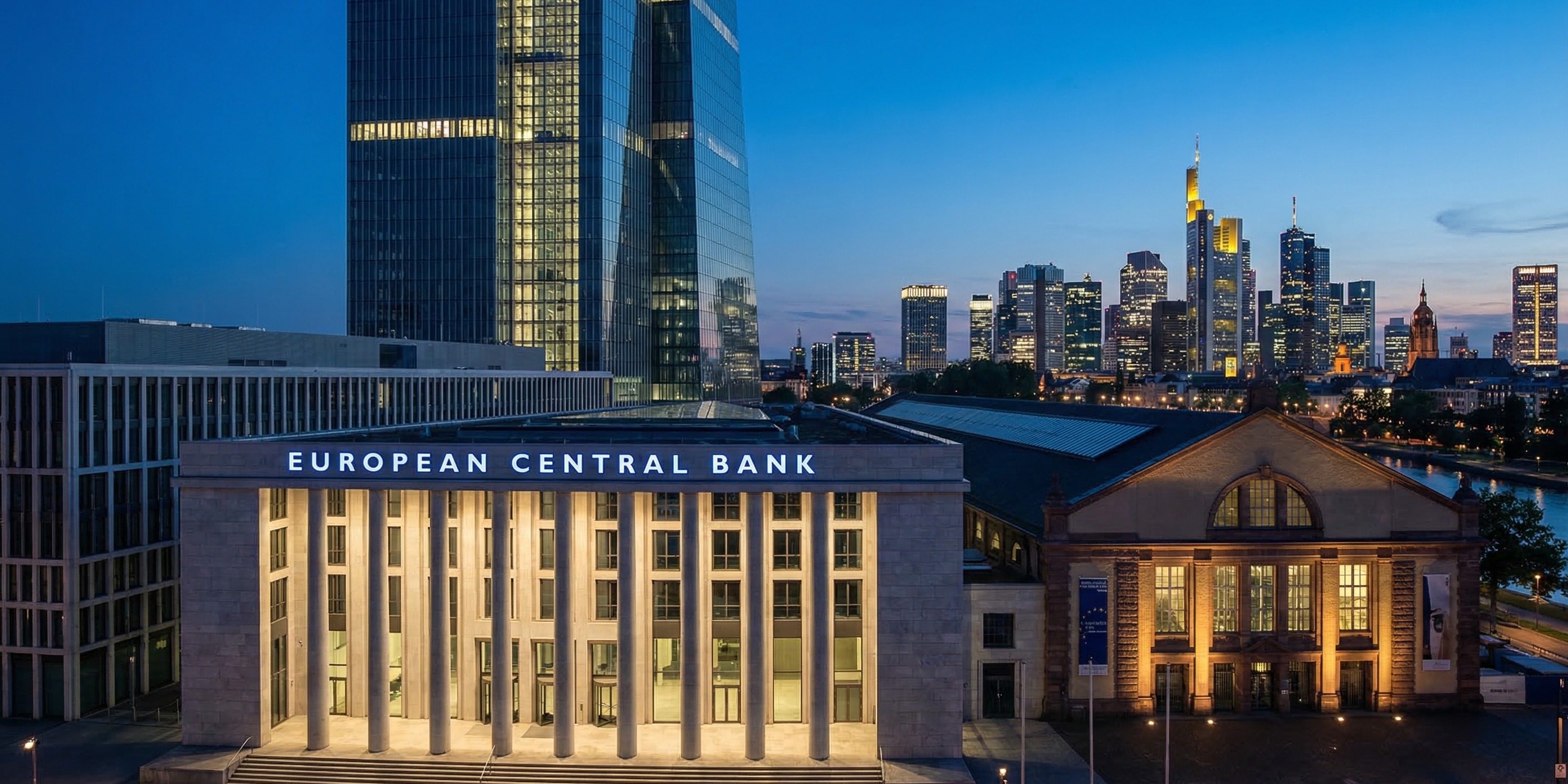
The European Central Bank held its deposit rate at 2.00% at its March meeting. Before the Iran war began, market consensus pointed toward another 25-basis-point cut in Q2. That consensus has been replaced by the opposite: markets are now pricing approximately 50 basis points of ECB rate hikes by year-end. ECB President Christine Lagarde stated the bank "will take necessary steps to keep inflation under control." The bind is acute — German factory orders collapsed 11.1% month-on-month in January, and eurozone industrial production contracted 1.5% month-on-month in the same period. The ECB is simultaneously staring at oil-driven inflation and a stuttering industrial base.
The Bank of England faces a closely related problem. The UK 10-year gilt yield ended the week at 4.996% — essentially at the 5% threshold. Markets are now pricing approximately 60% probability of at least one BOE rate hike in 2026, compared with near-consensus expectations for a cut before the Iran conflict began. UK January GDP growth came in flat at 0.0%, against a consensus forecast of +0.2%.
The Bank of Japan held rates at 0.75% on March 19 by an 8-1 vote, with board member Takata dissenting in favor of an immediate hike to 1.00%. Japan sources approximately 95% of its energy from the Middle East — Brent at $112 per barrel is inflicting compounding damage on the current account. The 10-year Japanese government bond yield rose to 2.282%. USD/JPY is approaching 160, amplifying imported inflation and compressing real household purchasing power. Takata's hike dissent signals internal pressure is building despite the external shock.
The Inflation Pipeline
Brent crude briefly touched $119 per barrel on March 19 after drone strikes hit the South Pars gas field, the world's largest natural gas reservoir, shared between Iran and Qatar. It settled at $112.19 on March 20. WTI crude is at $98.32, with Iraq declaring force majeure at all foreign-operated oilfields and Kuwait's Mina Al-Ahmadi refinery struck in a separate attack.
The energy cost is passing through the commodity complex. Urea fertilizer — approximately 50% of global nitrogen fertilizer supply transits the Strait of Hormuz — has risen from roughly $350 per ton in January to approximately $600 per ton in March, a 71% increase. Sugar prices have climbed 10% over three weeks of the Iran conflict; corn is up 6%. Citi Research projects a $120-per-barrel base case for Brent, with a bull scenario at $150. Saudi officials cited by the Wall Street Journal did not rule out $180 per barrel if Hormuz disruption extends past April.
Against this backdrop, the S&P 500 closed Friday at 6,506.48 — down 7.1% from its January all-time high of 7,002.58 and extending below its 200-day moving average for the fifth consecutive week. The VIX settled near 27, approaching but not yet reaching the 30 threshold that historically signals acute institutional stress.
Outlook: What to Watch
The next Federal Reserve decision is scheduled for May 6–7. If Brent holds above $110 and the first full post-conflict core PCE print — due in early April — shows energy pass-through reaching core measures, the one-cut dot plot may be revised to zero cuts. A hike remains a tail risk rather than the base case, but the tail has thickened materially since February.
Trump's infrastructure ultimatum represents the most consequential near-term variable. If US strikes target Kharg Island — which handles approximately 90% of Iran's crude exports — or Iranian pipeline infrastructure, $120-plus Brent becomes the consensus base case and June hike probability rises beyond the current 20% market pricing, as US Foreign Policy has outlined in its analysis of the doctrine and war powers implications involved.
On the diplomatic side, weekend talks in Washington between Ukrainian envoys and Trump's special representative Steve Witkoff represent one of the few active channels that could indirectly reduce Middle East escalation pressure — a Ukraine ceasefire framework would refocus US foreign policy bandwidth toward a European settlement. Foreign Diplomacy is tracking the Witkoff-Kushner Washington round and its implications for broader US strategic commitments.
The BOJ's April meeting is Japan's most consequential near-term decision. A Takata-led hike to 1.00% — while USD/JPY holds near 160 — would be a significant signal that the BOJ is willing to tighten into an energy shock. For US Treasuries, the 30-year yield crossing 5% would trigger a re-rating of corporate borrowing costs, mortgage spreads, and equity risk premiums that most strategists expect would accelerate the S&P 500's slide below 6,400. None of these are certainties. All of them were unimaginable in January.