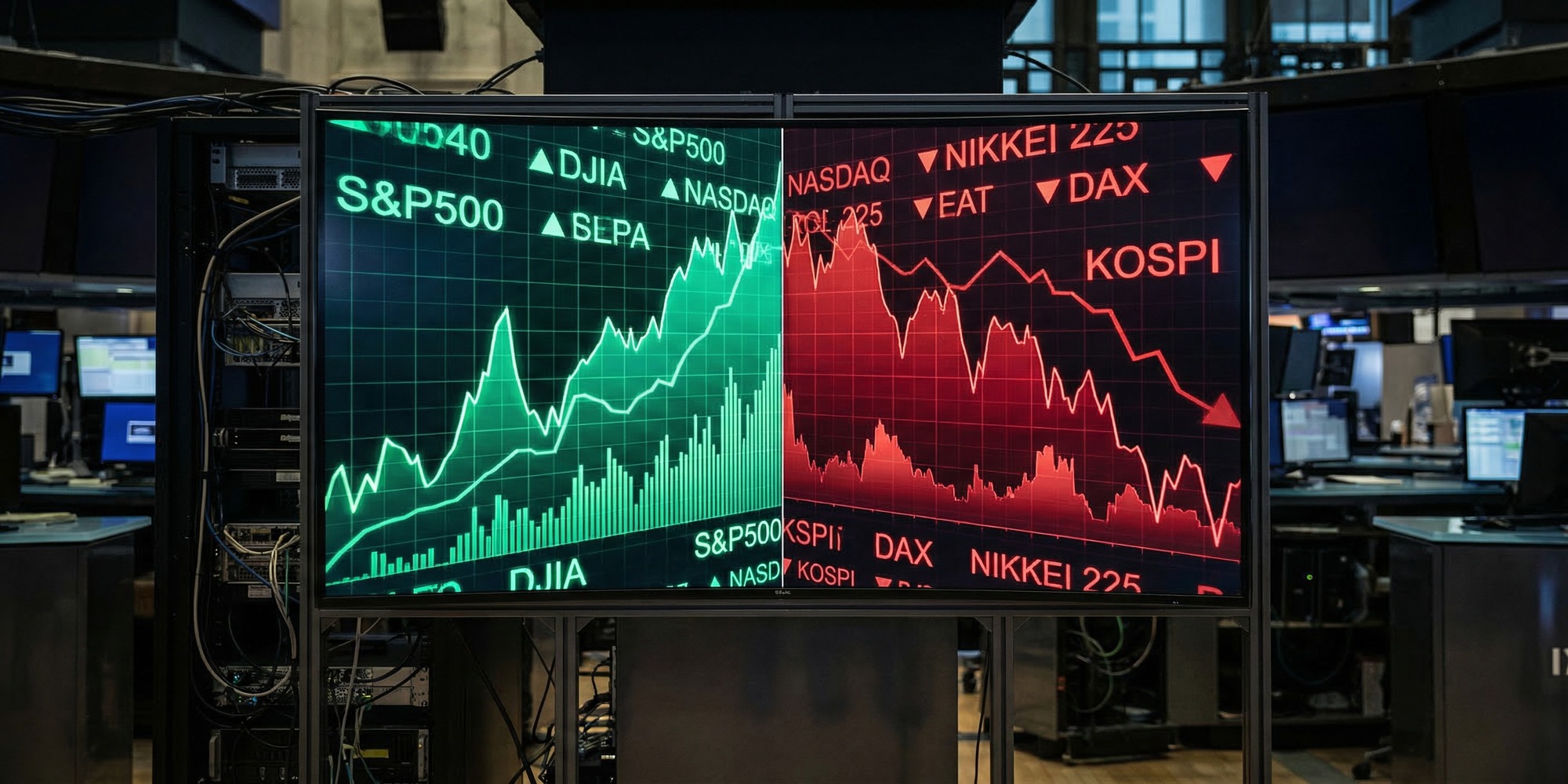
March 16–19, 2026 will be recorded as the most consequential monetary policy week of the year. Five of the world's major central banks — the Federal Reserve, the Bank of Japan, the European Central Bank, the Bank of England, and the Swiss National Bank — all delivered rate decisions within three trading days, and all arrived at the same conclusion: hold. But the surface unanimity masked a deeper and more consequential shift. The 2025 easing cycle, which had carried global rate expectations steadily lower, is now effectively over. The Iran war changed the calculus.
The Federal Reserve — Patience Under Pressure
The Federal Open Market Committee voted 11–1 on Wednesday to hold the federal funds rate at 3.50–3.75%, with Harris Miran casting the lone dissent in favour of a 25-basis-point reduction. The vote itself was less notable than the projections accompanying it. The FOMC's revised Summary of Economic Projections raised the median core PCE forecast for 2026 to 2.7%, up from 2.5% in the December projection, while GDP growth was nudged slightly upward to 2.4%. The unemployment rate forecast was held at 4.4% for year-end.
The dot plot delivered the most direct signal: FOMC participants now project just one rate cut in 2026, reduced from two cuts in the pre-war December projections. The long-run fed funds rate was pegged at approximately 3.1%, reflecting an upward drift in neutral-rate estimates. Fed Chair Jerome Powell, at the post-decision press conference, described the impact of the conflict as "too soon to know" but acknowledged that inflation was not coming down "as fast as hoped." US Market Updates has full coverage of the dot-plot revision and equity market reaction to Wednesday's decision.
Notably, Governor Christopher Waller — who had dissented in January in favour of a cut — switched to supporting the hold, reflecting a broader committee reassessment of the energy shock's persistence. Market pricing, which had assumed two cuts before the Iran conflict erupted, has now converged around a single cut in late 2026 at the earliest.
Bank of Japan — Normalization on Pause
The Bank of Japan held its policy rate at 0.75% on Thursday in an 8–1 vote, with board member Naoki Takata dissenting in favour of an immediate hike to 1.00%. The BOJ's post-meeting statement included an explicit warning that the rise in crude oil prices would exert "upward pressure" on Japan's consumer price index — a material acknowledgment given that Japan sources approximately 95% of its energy imports from the Middle East.
The January CPI print, at 1.5% year-on-year, was the first below 2% after 45 consecutive months above that threshold — a data point that had briefly opened the door to a more dovish trajectory. The Iran conflict effectively closed it. In currency markets, USD/JPY settled at 159.64 following the decision, with the yen gaining 0.1% against the dollar as traders interpreted Takata's hawkish dissent as a forward signal for April or June. Shunto wage negotiations — in which major Japanese corporations have accepted full pay-hike demands — continue to provide structural support for eventual policy normalization, conditional on oil prices and the duration of the conflict.
Europe's Central Banks — Vigilance Without Action
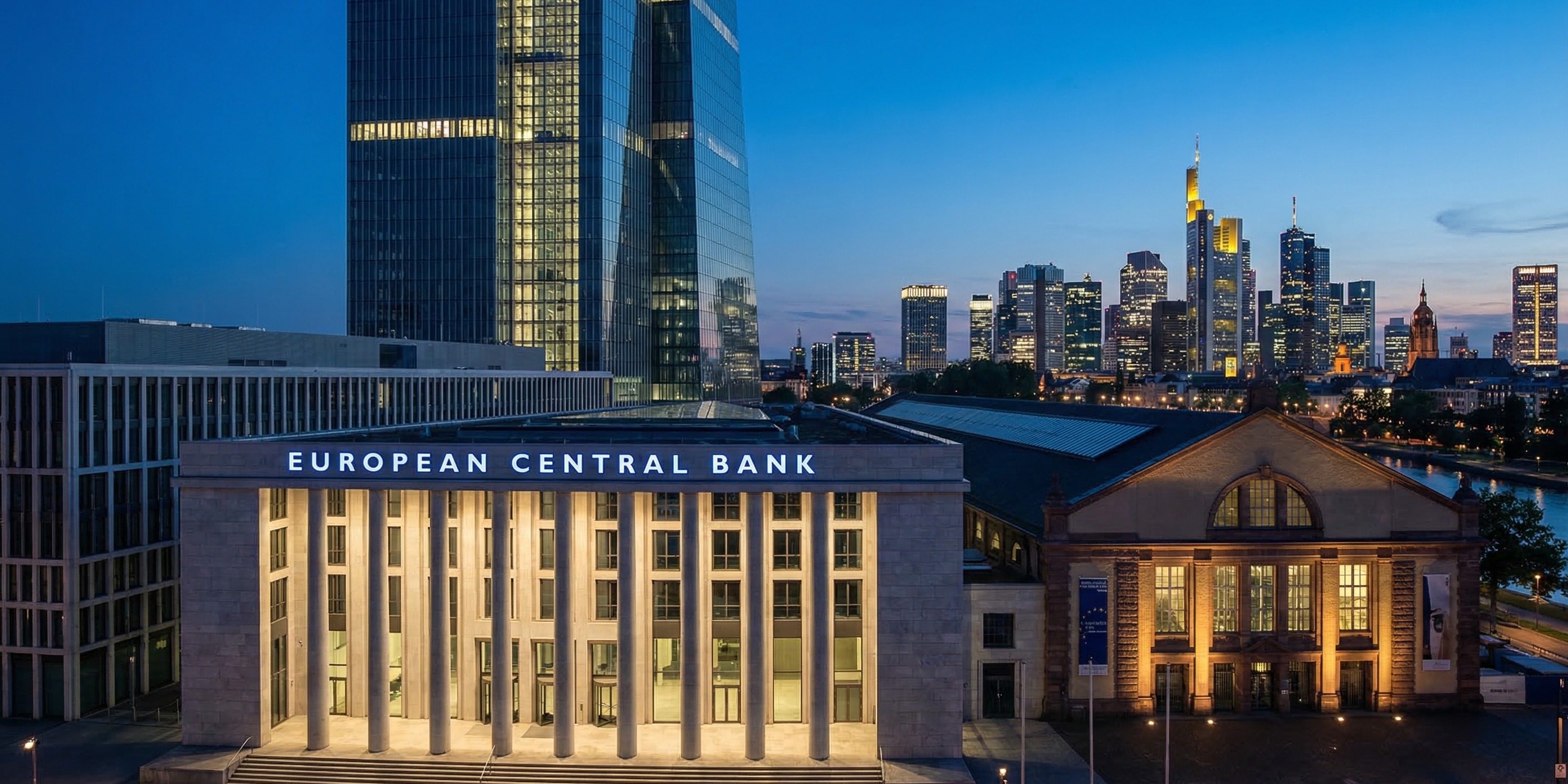
The European Central Bank held its deposit rate at 2.00% for the sixth consecutive meeting. ECB President Christine Lagarde is expected to strike a tone of "vigilance" in her Thursday afternoon press conference, a formulation that market participants interpret as pre-commitment language ahead of potential hikes. Euro-zone headline CPI stood at 1.9% in February — up from 1.7% in January, though this data predates the war's full energy impact. PIMCO's baseline scenario projects headline inflation peaking near 3% in 2026, with energy contributing approximately 1 percentage point to that rise.
The trajectory is more uncertain than it has been in several years. We are watching energy markets and their second-round effects with great attention.
— ECB Executive Board Member Isabel Schnabel, March 2026
Derivatives markets are now pricing 50 basis points of ECB rate hikes by year-end — two full increases, up from near-zero probability before the Iran conflict began. The Bank of England held at 3.75%, but the calculus there has shifted even more sharply. A March cut had been a near-consensus expectation before the war; market pricing has since swung to approximately 60% probability of a BOE hike in 2026, according to Politico's analysis of rate derivatives. The Swiss National Bank, holding at 0.00%, faces a different dynamic: the safe-haven Swiss franc has strengthened materially, raising the spectre of imported deflation if the currency surge continues.
The geopolitical thread connecting all five decisions was identical. The collapse of Geneva back-channel talks between March 17–18, as reported by Foreign Diplomacy, eliminated the near-term diplomatic off-ramp that markets had partially priced in. With no ceasefire in view, the Strait of Hormuz remains disrupted, and Brent crude is holding in the $103–$113 per barrel range according to current exchange data — well above the $91 level at which the Fed held in early March.
What to Watch
The immediate calendar is dense. Lagarde's press conference on Thursday afternoon (still pending at time of publication) will be the most closely watched data point of the day — the market wants to know whether "vigilance" is a signal or a placeholder. The BOE's post-decision commentary carries similar weight, given the scale of the repricing in UK rate expectations. For the SNB, the franc's trajectory in the coming weeks will determine whether its 0.00% rate floor remains tenable.
Looking further forward, the April BOJ meeting has emerged as the most consequential near-term decision in Asia. The wage data from Shunto and the trajectory of oil through the Hormuz disruption will jointly determine whether Governor Kazuo Ueda has the cover to move. US April payrolls and the PCE deflator — due early in April — will set the baseline for whether the Fed's one-cut projection survives the data review. The next FOMC meeting is scheduled for May 6–7, 2026.
The broader macro dynamic is now clearly defined. Every major central bank faces the same structural bind: an energy-driven inflation impulse originating in a geopolitical event over which they have no direct influence, imposed on economies where demand and wage dynamics have already tightened the inflation baseline. None are willing to cut into that environment, and several are now actively contemplating the opposite. The State Department's emerging diplomatic track on Iran, as reported by US Foreign Policy, represents the one channel through which the energy shock could moderate — but policymakers are not in a position to wait for diplomacy. The rates markets have begun to price accordingly.