
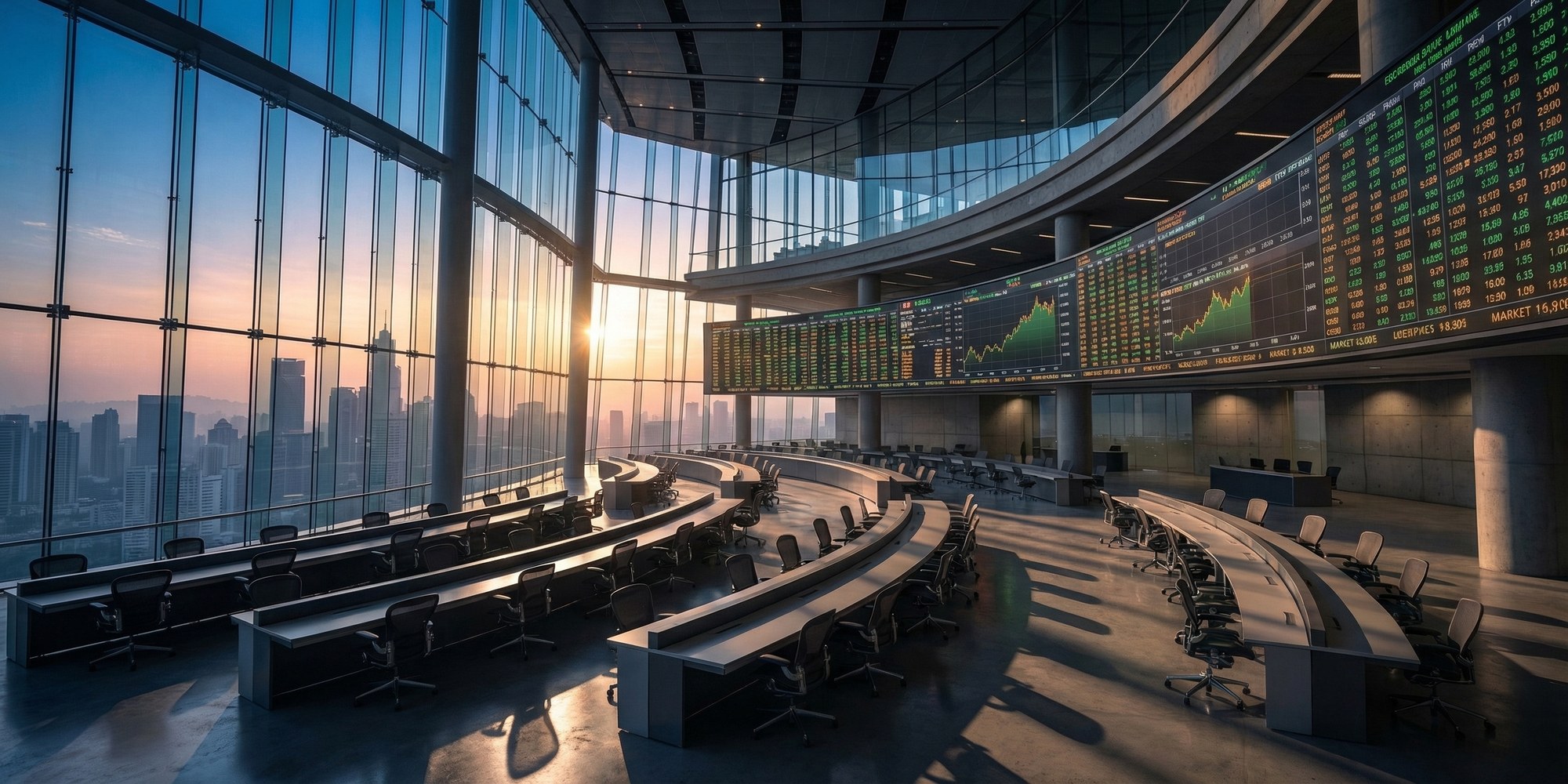
South Korea's KOSPI index staged its sharpest single-session rally since the 2008 global financial crisis on Thursday, surging as much as 12% before settling approximately 10% higher after President Lee Jae Myung activated a Won100 trillion ($68 billion) market stabilisation fund. The intervention reversed two days of devastation — the KOSPI had fallen approximately 19% across Tuesday and Wednesday — and provided a focal point for a broader Asian equity recovery. Simultaneously, China's National People's Congress opened its annual Two Sessions meeting and unveiled a 2026 GDP growth target of 4.5–5%, the lowest range in at least three years, in a move that markets interpreted as pragmatic acknowledgement of the headwinds bearing down on the world's second-largest economy.
South Korea's Dramatic Reversal
The KOSPI's implosion earlier this week reflected South Korea's particular vulnerability to the Iran conflict. The country is a major importer of Middle Eastern crude and a leading producer of semiconductors with deep exposure to global supply chains — both factors that amplified investor panic when US-Israeli strikes on Iran's nuclear and energy infrastructure began over the weekend of March 1–2. The index's near-19% two-day decline ranks among its worst on record, eclipsing selloffs during COVID-19 and approaching the severity of the 2008 Lehman shock.
Thursday's reversal was equally historic. President Lee's activation of the Won100tn stabilisation fund — assembled from Korea's pension pools, financial institutions, and the Korea Investment Corporation — sent an unambiguous signal to markets that Seoul would not permit a disorderly freefall. The fund is authorised to purchase equities across major index constituents, effectively acting as a price floor during extreme dislocations.
The stabilisation fund was the circuit-breaker investors needed to see. The question now is whether market conditions stabilise or whether a fresh escalation forces its full deployment.
— South Korea Financial Supervisory Service, March 5, 2026
Japan's Nikkei 225 also benefited from the improved regional tone, rising approximately 2.1% on Thursday, supported by hopes of diplomatic progress on the US-Iran conflict. However, Nikkei gains remained capped by a stronger yen, which has appreciated as investors sought safe-haven currencies — a headwind for Japan's export-dependent corporate sector.
China Recalibrates Its Growth Ambitions
In Beijing, Premier Li Qiang delivered the government work report at the opening of the National People's Congress, setting China's official 2026 GDP growth target at 4.5–5% — a range that marks the first downgrade from the "around 5%" targets maintained in 2023, 2024, and 2025. While the reduction appears modest, it carries significant symbolic weight: it represents Beijing's public acknowledgement that structural forces are constraining the pace of expansion.
Chinese equities responded with measured optimism. The CSI 300 and Hang Seng indexes each gained approximately 1% on Thursday, supported by the NPC's pledges of targeted fiscal stimulus and "high-quality growth" orientation, but constrained by persistent global bond market stress and elevated oil prices. The 4.5–5% target signals Beijing's acknowledgement of multiple structural headwinds: subdued consumer confidence, an ongoing adjustment in the property sector, and mounting external trade frictions. As a leading importer of Iranian crude — China purchases roughly 1.8 million barrels per day — any prolonged disruption to Hormuz transit flows also poses a direct supply-side risk to the economy.
The NPC announcement positioned the growth target within a broader "15th Five-Year Plan" framework focused on technological self-reliance and domestic consumption expansion. Analysts at Channel News Asia noted that Beijing is framing the lower target as a deliberate shift toward quality over quantity, though the IMF's incoming April World Economic Outlook is expected to reflect any downside revisions driven by the oil-price shock.
Bond Markets and the Broader Macro Backdrop
Asian equity gains unfolded against a backdrop of continued stress in global bond markets. The yield on US 10-year Treasury notes rose nearly 6 basis points to 4.14% on Thursday — moving inversely to prices — as elevated oil prices stoke inflation expectations and prompt investors to scale back projections of central bank rate cuts. In Europe, the German Bund market is heading for its steepest weekly selloff in more than a year, and traders now assign a 60% probability to an ECB rate hike by December 2026.
Royal London Asset Management's Trevor Greetham noted that surging natural gas prices — a secondary effect of the Strait of Hormuz disruptions — are prompting bond investors to re-price rate expectations upward. The geopolitical context is equally important: with the US Senate voting on Wednesday to back the Trump administration's military campaign against Iran, investors now face an extended conflict horizon that market strategists were not pricing at the start of the week. For a deeper analysis of the US policy dimensions driving these market movements, US Foreign Policy tracks the legislative and strategic backdrop behind Washington's military posture. The diplomatic dimensions of the conflict — including regional security arrangements and potential escalation scenarios — are covered in detail by Foreign Diplomacy.
Outlook: What to Watch
The near-term trajectory for Asian equities hinges on two variables: the duration and intensity of the Iran conflict, and Beijing's willingness to deploy additional stimulus if domestic data disappoints. With the KOSPI recovering much of its week's losses, attention will shift to whether the Won100tn stabilisation fund provides lasting support or whether a fresh escalation — such as a formal closure of the Strait of Hormuz — forces a renewed selloff. Saxo Bank strategist John Hardy cautioned that "markets are still not prepared for the conflict lasting anything more than a few weeks," a scenario that would likely push Brent crude beyond $90 per barrel and undermine the tentative Asian recovery.
For China, the market reaction to the 4.5–5% growth target will be tested against Q1 economic data beginning in April. Key releases include industrial production, retail sales, and trade balance figures, all of which will provide the first real read on how significantly Middle East tensions are filtering through to Chinese economic activity. The IMF Spring Meetings in April are expected to incorporate the oil shock into revised global growth projections.
Wall Street's response to Thursday's Asian rally was muted — US equities opened lower as bond market selling resumed and Brent held near $84 a barrel. US Market Updates has full coverage of the American equity and fixed-income market developments as the session unfolds.
Key dates for market participants: China's NPC full session runs through approximately March 15; the US Federal Reserve meets March 18–19; and the IMF Spring Meetings are scheduled for April 2026, where revised global growth forecasts will incorporate the Iran conflict's economic toll.